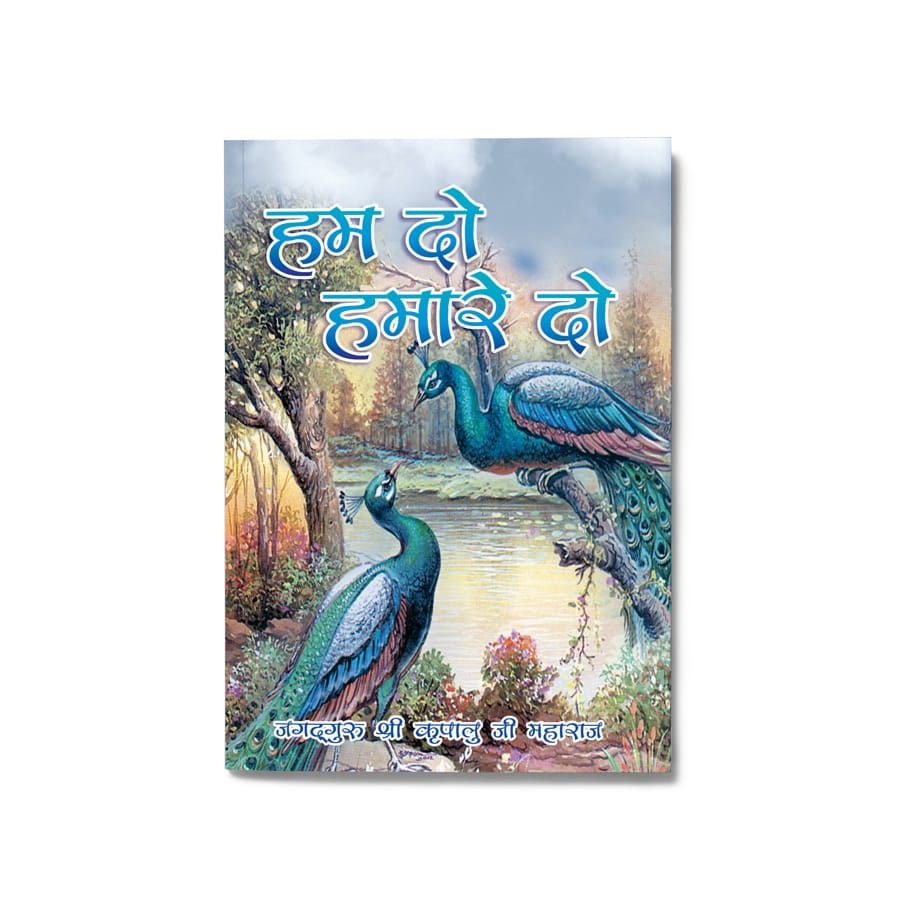
Hum Do Hamare Do - Hindi
There is a body and there is an owner of that body, that is, the individual soul. Without the soul, a body cannot remain. And the soul cannot remain without a body either ...
The occasion was Shri Radha Rani's Chathhi, the sixth day after Her appearance in the palace of King Vrishabhanu, and the date was 5 September 1987. For the people of Nagpur it was a day of extra-special significance due to this discourse given by Jagadguru Shri Kripalu Ji Maharaj as part of the celebrations. Kripalu Ji Maharaj takes the commonly known slogan, hum do hamare do, and uses it as the basis for a very clever and skillful elucidation of God and our relationship with Him.
In the world, this catchphrase means "us two, our two", but Kripaluji gives it a spiritual connotation by describing it as "the two me's and the two mines". He says that we all experience ourselves in two ways - as a body and a soul, and both require the other for their existence. The bond the body and soul have is very close, even though the soul is divine, eternal, and conscious, whereas the body is temporary and insentient. Kripalu Ji Maharaj discusses the three bodies that make up a single body, the nature of this world, both sides of the debate around its illusionary nature, the nature of God, and the meaning of devotion.
More Images
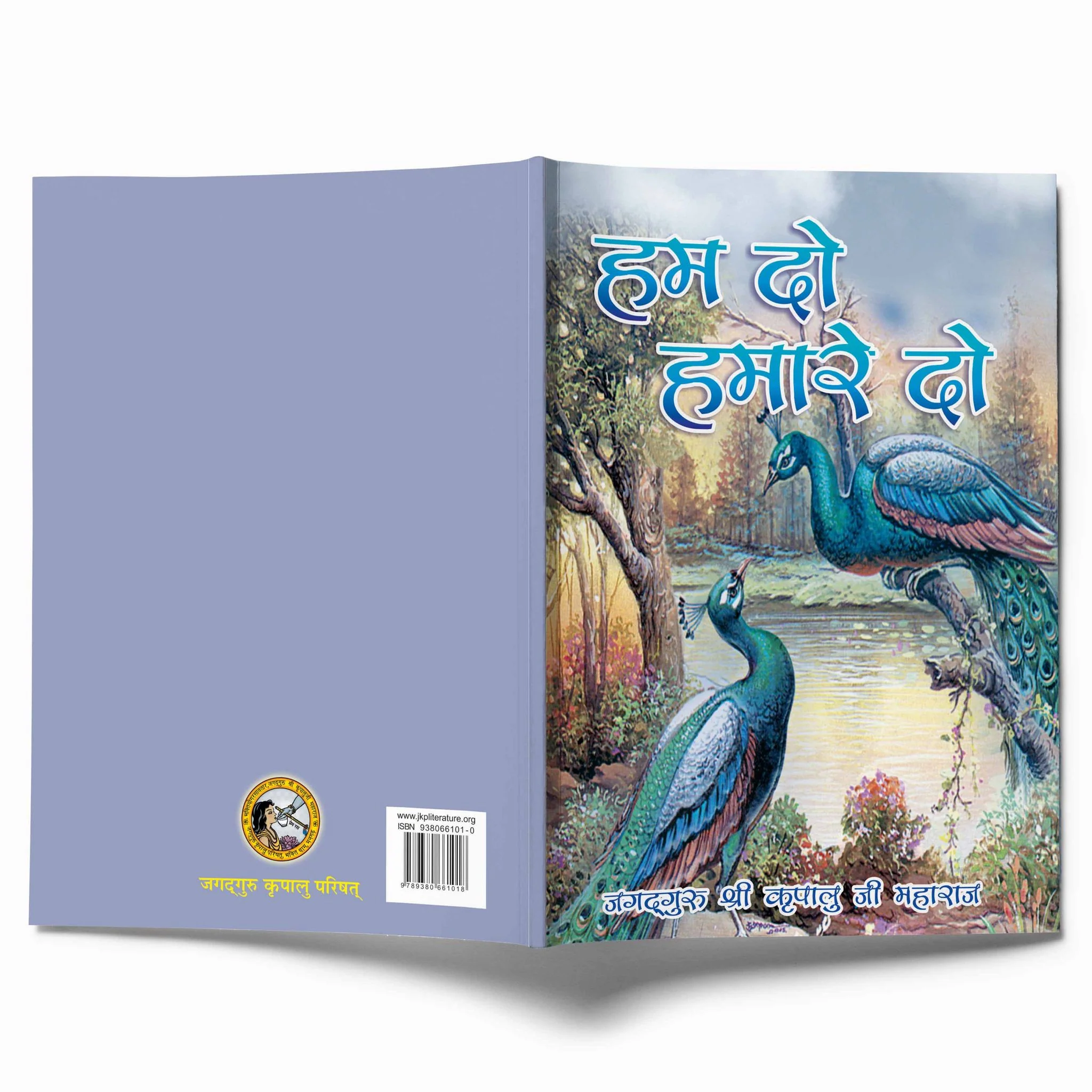
Hum Do Hamare Do - Hindi
There is a body and there is an owner of that body, that is, the individual soul. Without the soul, a body cannot remain. And the soul cannot remain without a body either ...
The occasion was Shri Radha Rani's Chathhi, the sixth day after Her appearance in the palace of King Vrishabhanu, and the date was 5 September 1987. For the people of Nagpur it was a day of extra-special significance due to this discourse given by Jagadguru Shri Kripalu Ji Maharaj as part of the celebrations. Kripalu Ji Maharaj takes the commonly known slogan, hum do hamare do, and uses it as the basis for a very clever and skillful elucidation of God and our relationship with Him.
In the world, this catchphrase means "us two, our two", but Kripaluji gives it a spiritual connotation by describing it as "the two me's and the two mines". He says that we all experience ourselves in two ways - as a body and a soul, and both require the other for their existence. The bond the body and soul have is very close, even though the soul is divine, eternal, and conscious, whereas the body is temporary and insentient. Kripalu Ji Maharaj discusses the three bodies that make up a single body, the nature of this world, both sides of the debate around its illusionary nature, the nature of God, and the meaning of devotion.
Product Information
Product Information
Shipping & Returns
Shipping & Returns
Description
There is a body and there is an owner of that body, that is, the individual soul. Without the soul, a body cannot remain. And the soul cannot remain without a body either ...
The occasion was Shri Radha Rani's Chathhi, the sixth day after Her appearance in the palace of King Vrishabhanu, and the date was 5 September 1987. For the people of Nagpur it was a day of extra-special significance due to this discourse given by Jagadguru Shri Kripalu Ji Maharaj as part of the celebrations. Kripalu Ji Maharaj takes the commonly known slogan, hum do hamare do, and uses it as the basis for a very clever and skillful elucidation of God and our relationship with Him.
In the world, this catchphrase means "us two, our two", but Kripaluji gives it a spiritual connotation by describing it as "the two me's and the two mines". He says that we all experience ourselves in two ways - as a body and a soul, and both require the other for their existence. The bond the body and soul have is very close, even though the soul is divine, eternal, and conscious, whereas the body is temporary and insentient. Kripalu Ji Maharaj discusses the three bodies that make up a single body, the nature of this world, both sides of the debate around its illusionary nature, the nature of God, and the meaning of devotion.